How IoT is keeping Panama Canal shipping flowing just in time
- by 7wData
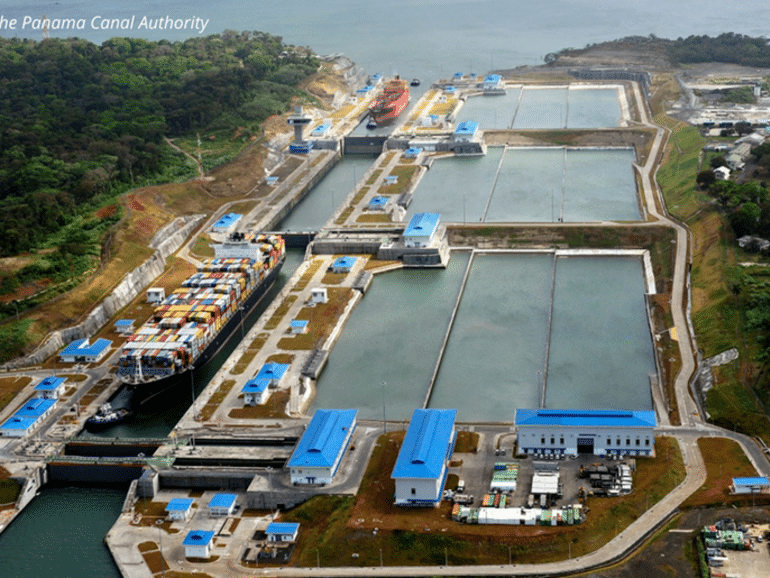
The Panama Canal sits between North and South America, enabling thousands of tons of shipping to avoid a detour around Cape Horn.
Like the rest of the world, the canal relies on computer systems to keep it operating efficiently 24 hours a day, and those systems are undergoing a major overhaul that aims not only to keep them up to date, but also to help the Canal handle more traffic.
QinetiQ, a subsidiary of Dassault Systems, which also has systems working at the Federal Aviation Administration (FAA), the International Space Station, and the UK's Ministry of Defence, is the company handling the upgrade.
According to QinetiQ, the new system means that, for the first time, the canal will be able to execute an entirely integrated operating plan for all its critical resources.
"Improved situational awareness and data can inform better decision-making, which in turn will help mitigate operational risk," the company said in a statement. "QinetiQ will also help reduce costs by optimising the way in which the Canal plans and programs its resources."
The QinetiQ system should shorten vessel waiting times, increase the number of potentially available vessel slots each day, and improve the overall reliability of the route, the company said.
"We provide a single software solution that can deal with any kind of planning and optimisation challenge within a supply chain," QinetiQ's head of Latin America, Camilo Gaviria, told ZDNet.
"One of the big benefits of our software is its flexibility," he added. "We can solve anything from the Panama Canal, and the vessels transiting it, and production planning, all the way through to planning the rosters of FAA controllers," he said.
QinetiQ had been working with the canal for "about 18 months" when the first RFPs for planning, scheduling, and resourcing were put in.
"They were looking for a way to plan their vessels, taking into account all kinds of resources and restrictions such as maintaining the efficiencies of their transits while keeping current resources at maximum efficiency," said Gaviria.
"What they wanted was an application that could not only help the transits operate as efficiently as possible, but could also plan the way they used the boarding resources -- the line handlers, tug boats, lock keys -- on both a day-to-day operation basis and in higher levels of planning.
[Social9_Share class=”s9-widget-wrapper”]
Upcoming Events
Shift Difficult Problems Left with Graph Analysis on Streaming Data
29 April 2024
12 PM ET – 1 PM ET
Read MoreCategories
You Might Be Interested In
I got 99 data stores and integrating them ain’t fun
27 Sep, 2016You know the story: corporation grows bigger and bigger through acquisitions, organograms go off the board, IT assets skyrocket, everyone …
In the Middle of DatA Integration Is AI
1 Nov, 2017The connection between data integration and artificial intelligence is growing. Have you never noticed that acronym hiding in plain sight …
What is generative AI, and why is it suddenly everywhere?
12 Jan, 2023Artificial intelligence is suddenly everywhere — or at least, that’s what it seems like to me: A few weeks ago, …
Recent Jobs


Do You Want to Share Your Story?
Bring your insights on Data, Visualization, Innovation or Business Agility to our community. Let them learn from your experience.
Privacy Overview
Get the 3 STEPS
To Drive Analytics Adoption
And manage change