
Still don’t understand the blockchain?
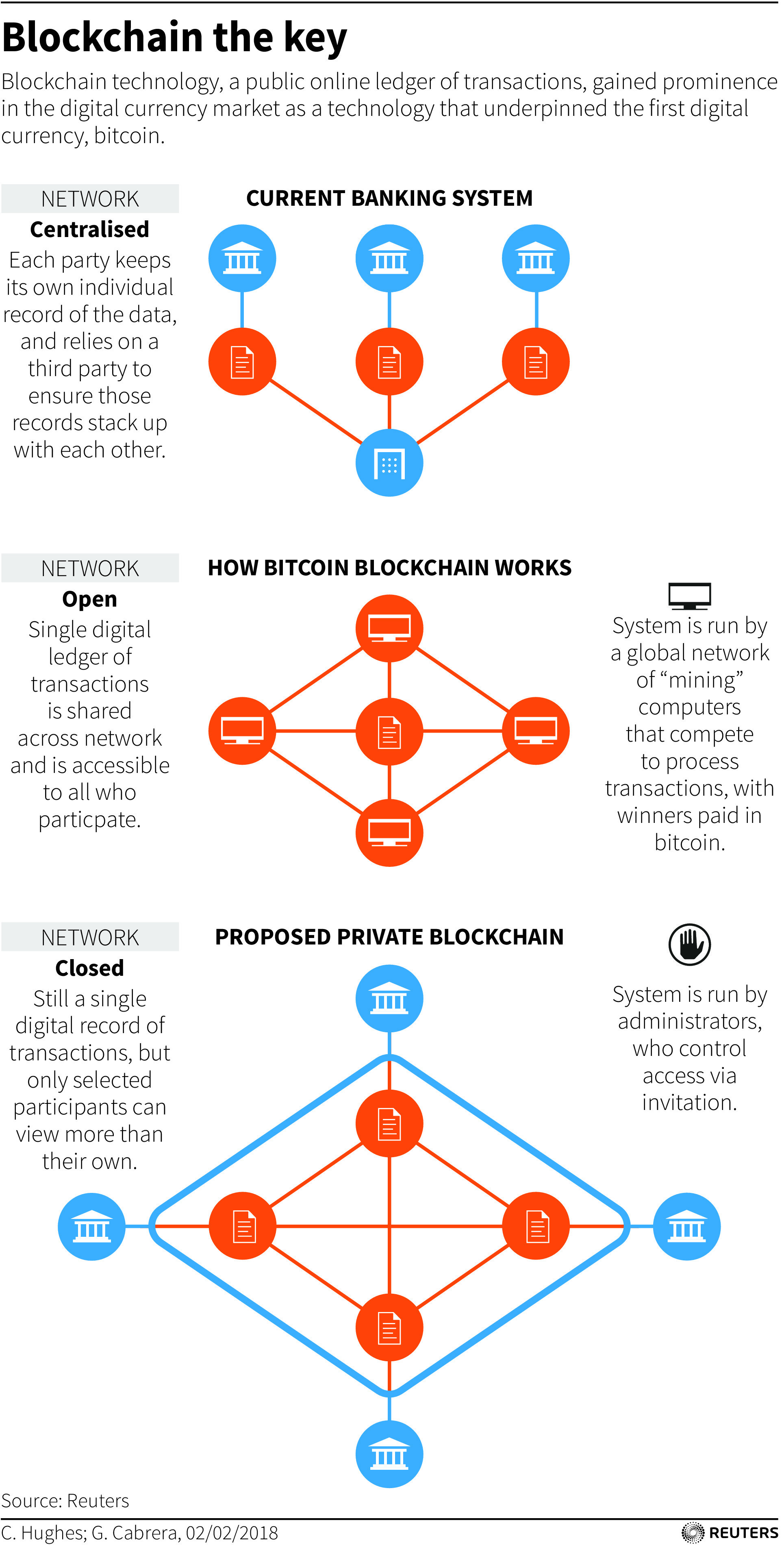
The world has been captivated by the drama surrounding Bitcoin’s meteoric rise and subsequent collapse. In December, the price of a single coin reached nearly $20,000 before plummeting to below $6,000 in early February. Matters seemed decidedly grim when economist Nouriel Roubini slammed the “melting bitcoins” of the crashing cryptocurrency. Several days later, the general manager of the Bank for International Settlements joined in, likening the mania around Bitcoin to “a combination of a bubble, a Ponzi scheme and an environmental disaster”.
Among these critical voices was that of Nobel Prize-winning economist Robert Shiller, who, even before the cryptocurrency lost nearly two-thirds of its peak value, expressed profound doubt over its longevity. But he was quick to separate his scepticism about Bitcoin’s long-term prospects from his optimism for the technology on which it was built: blockchain.
Though the price of Bitcoin has been uncharacteristically stable at the time of writing (though it’s beginning to drop again), it’s difficult to imagine it reaching the zenith of late last year, particularly with mounting threats of greater regulation cooling down the speculative excitement. So, if Roubini and these other doomsayers prove to be correct and the preeminent cryptocurrency is teetering on the brink, what, if anything, will be its legacy? What will become of the blockchain?
Indeed, it’s so poorly understood and yet seemingly vital for one’s survival in today’s digital age there are now blockchain courses on offer at a number of universities. The Royal Melbourne Institute of Technology will be launching the first of its kind in Australia this month.
But whether you want to obtain a university-level understanding or simply just enough of the basics to get added to the office crypto chat, Johnson’s piece in the New York Times is a good place to start. In it, Johnson explains how by its very nature the blockchain has the potential to be truly disruptive – so disruptive that it’s frequently likened to the internet in the mid to late 90s – and on the verge of revolutionizing the way we live.
How does the blockchain work without some kind of intermediary facilitating the process? When it comes to Bitcoin, the first application of blockchain, a large network of computers validates and records all financial transactions in an open ledger that is secure from tampering.



